Showing posts with label good writing. Show all posts

Wednesday, May 27, 2015

Taking Time to Learn

Okay, so confession time. I'm one of the most impatient people on the planet. No, really. You might be thinking of Two Weeks Notice right now, and when Hugh Grant says, "That's silly. Have you met every person on the planet?" << Ha!

Of course I haven't met every person on the planet, so maybe I just FEEL like the most impatient person ever. Maybe you can relate to this.

Anyway, I've been getting some feedback about my writing, and I've realized that I need to A) slow down, and B) learn new stuff. That last one is vague, but I know there's more I need to do in order to find my success again.

But I'm impatient, and I had previously made some writing goals to draft two books this summer (since I don't work and all that). I find myself resisting the thought to maybe re-draft my goals, and take the time to learn what I need to learn before I draft the novels.

I have notes from the conference I attended last week. I have a few writing exercises I need to get done before I draft. I bought a new craft book on the suggestion of the instructor of another class. I need to read it, ponder it, incorporate it into my writing. And I need to fill out my beat sheets for my new novels.

I think I'll have to do less work later if I put the time into this now. So I guess this is me publicly saying I'm going to take the time to learn a bit more -- about the writing craft, my characters, and my plots -- before I start drafting.

Have you ever had to slow down and readjust goals?
Monday, May 18, 2015

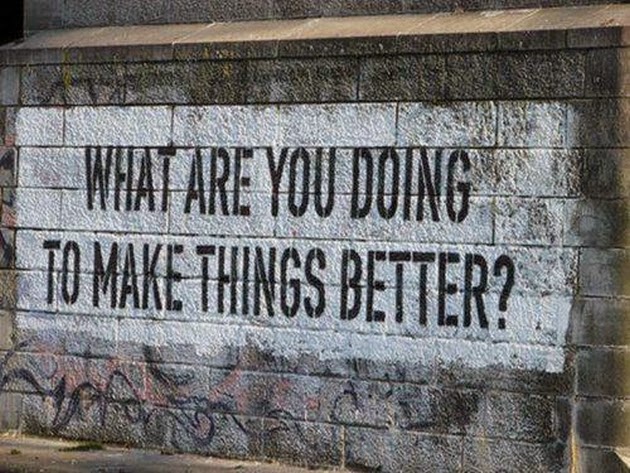
You Can Do Better

Okay, so this past weekend I attended the LDStorymakers conference in Utah. I've been on the committee for this awesome con for a few years now, but this past weekend I really focused on attending the classes.

The several I got to attend were fantastic, and I have some great notes to help me in my writing. But I attended one workshop called "Deep Editing" by an amazing author and mentor Margie Lawson. Not only did I come away with many devices and revision ideas, but I wrote in my notes, in all caps, YOU CAN DO BETTER.


I think this is something that we struggle with as authors, especially if we've achieved some success. We fall into patterns of our writing, thinking it's "good enough," because it's worked before. So it was not only a fantastic class with information I needed to take my writing to the next level, but also a little pep talk for myself.

I really can do better. And I'm going to work on doing just that!

What are you working on in your writing right now?

Monday, November 18, 2013

How Do You Know If You're Good?

Okay, so many of you know I'm querying. And if you didn't, you do now! Of course, I'm getting rejected. It's part of the business. But as the rejections have been coming in, I'm always left with one question: How do you know if you're a good writer?

Is it because people tell you you are? Is it because you have an agent? A lot of sales? A deal?

I'm not sure, because I've read books that win big, major awards and I walk away from them because I don't like them. I've read books that are brilliant that no one else seems to be talking about. I've read books that sold for a lot of money and found them boring.

So how do you know if you're a good writer? What's the measurement?

I hate stuff like this, because I am a concrete person. I want a plan, a method, to know. Like, I can count my calories and know how much I've eaten. I can see the weight coming off the scale (BTW, I'm down 10 pounds now! Just started a couple of weeks ago). I know how to measure the success.

But with publishing, I don't.

I think that might be the most frustrating thing of all. I don't want to publish something bad, something poorly written or imagined, something poorly executed. But I don't know how to tell what's "good" and what's "bad."

So how do you know if you're a good writer?

Monday, June 24, 2013

When in Doubt, DELETE

Okay, so if there's anything I've learned over the past five years, it's this: The delete key is your friend. There's nothing "darling" about words that don't work, and if you're not sure if they're working or not, chances are, they're not.

My philosophy in this situation? Delete.

When my critique partners start asking me questions about a specific sentence or passage, and I can't answer? Delete.

When my plot is feeling too heavy and convoluted? Delete.

When a chapter needs to be rewritten? Delete it all, and start from blank pages.

I have deleted entire portions of many of my novels in the past. In POSSESSION, I completely wiped out several chapters, creating a Point A and a Point B. I then rewrote a new way to get from A to B.

And you know what? It was better. It worked.

In another of my as-yet-unpublished novels, I deleted about 25,000 (that is not a typo) words--the last 1/3 of the novel. I can hear some of you going, Why? Why would you do that? Didn't you save some of them? What if there was a particularly brilliant sentence?

The truth is, the ending wasn't working, and I couldn't see how it could work with all that black on the page. So I deleted it.

As for combing through the work to find that one awesome piece, I guess I just don't care. I suppose that if I did write one brilliant sentence that might be worth saving, I could write another equally fantastical sentence to take it's place.

In fact, I'm not going for just one sentence. I'm looking to make each word the right one, each sentence more compelling, each scene vital to the overall workings of the book.

And if it's not working... Delete.

So yes, whenever I'm in doubt, I delete. Have you done this? How do you feel about the delete key?

Friday, February 3, 2012

How To Write Better

Okay, so I've been edited extensively before. My agent is highly editorial, number one, and nothing goes past her eagle eye to my publishing house without me bleeding all over it.

Literally. I will admit that I cried once. Then I opened the cracking document and fixed whatever she wanted me to fix.

Anyway, so this time around, I sent her a book. I hadn't had one other person read it. Not one. I didn't have time for beta reads or anything. So basically it had my sucktacular attempts to get it right and I sent it to my agent.

She emails to say she thinks I need to do another pass before we submit (no surprise there--did I mention NO ONE else had read it?), and she'll have notes for me soon. I want to eat half my body weight in sour patch kids, because until that doc lands in my email, I'm a nervous wreck. Will I cry again? Did I ruin the story? How bad does this book that NO ONE else read stink?

And soon? What the heck? Soon can't be soon enough. (I've also learned that "soon" could mean "later today" or "next week.")

So I work on other stuff and try to maintain my diet so that when the email comes, I'm ready.

So it comes. I purposefully don't open it until I've eaten and have my pajamas on. (Because everything is better in pj's, right?)

So I open the document...

And surely she's jesting. This is nothing! Some line edits. LINE EDITS. Maybe 3 comments, and the things she's suggesting in said comments are easy to fix.

That's it!

It can't be true. I finish the line edits in a single night. I go to bed thinking that I'll get the real email with the real document in the morning.

It doesn't come.

Can it be? Maybe I don't suck as much as I thought. Or hey, maybe I've learned how to write better.

Maybe. Both of those are doubtful, but I did want to share one tip today that I learned from doing these line edits.

You can convey something in a more powerful manner with less words. Some examples from the book I turned in.

What I had: "It seemed to fit well enough, and when she gave it a gentle squeeze, I couldn’t even remember my own name."
Edited to: "It fit just right, and when she gave it a gentle squeeze, I couldn’t even remember my own name."

What I had: "The emotions coming from him couldn’t settle into one specific thing. Love, anger, desperation, more anger, confusion."
Edited to: "His emotions couldn’t settle into any one thing."

What I had: "And she obviously hadn’t slept much over the last few weeks."
Edited to: "And she obviously hadn’t been sleeping much." (I know this seems little, but the "over the last few weeks" is totally unnecessary. It's the little things that make your writing better, you know?)

Things I use a lot that aren't necessary:

  • Then
  • for a moment
  • many times before
  • or something (hey, I'm a conversational writer, what can I say?)
  • I didn't answer. (No duh. If there's no dialog, he didn't speak. I do this ALL THE TIME in some form. "without another word" "I waited, silent." Or something. Ha! But dude, it doesn't need to be expressly said that the MC isn't talking, because if they were there'd be dialog!)
  • totally (don't judge me)

Some words are unnecessary. Good writers use only the words they need, and nothing more. I highly suggest you razor those words out of your MS on one of your revision passes.

What do you think? What are some of your unnecessary catch phrases? Can you use less words and achieve more power?

Monday, November 7, 2011

More of You Must Die!

Dude, okay so not like you: you. But like you: your characters.

There's something I've noticed about myself as a writer. I don't want anyone to die. Well, the bad guy of course, but no one else. So it's been extremely difficult for me to make anyone actually bite the bullet.

Sure, I make them suffer, I make them cry, I make them bleed, but no one actually dies.

But I've realized over the past couple of weeks that more of my characters must die. A lot more. I've been reading some fabulous books where the authors are braver than me. They killed people off left and right. People I as a reader loved. People the MC's loved.

And I found my courage to kill. (Dude, that sounds terrible!) I've decided that it's okay to let some of my characters go into the light. After all, it sure would make A) the book better and B) my life as the author easier, because then I don't have to keep track of that particular person anymore.

So there. As I sit down to NaNo this month, I keep repeating to myself, "More of you must die!"

Is it easy for you to kill your characters? Why or why not?

Monday, October 31, 2011

Verb It Up

Okay, so I know today is Halloween, and many of you are probably blogging about said holiday, but I absolutely hate Halloween with every fiber of my being. I cannot tell you how happy I am that I don't teach on Monday and that Halloween is on a Monday this year.

The joy is too huge.

Anyway, today's blog post is really about verbs. I love verbs. I think verbs make or break what I deem to be "good" writing. When I read, I'm looking for brilliant use of verbs, and when I find it, it's what makes me fall in love with a book.

Let's examine:
A MILLION SUNS by Beth Revis: That's right, I've read it. If you haven't read ACROSS THE UNIVERSE, you should. Beth is a master with verbs.

Now, no spoilers, since this book isn't out for a couple more months, but I just want to highlight some sentences.

"She snaps the box open."

This seems simple, but the verb "snaps" really adds, well, snap to this sentence. It could've easily been "She opens the box." but it wouldn't then have that something extra. That something that gives me an idea of how she opens the box, that emotional element.

"A million suns stretch out beyond me, their light piercing the darkness."

Again, this is a beautifully crafted sentence, and I think it's because of the "piercing." I love that the light can pierce the darkness. "Stretch" isn't anything to shake a stick at either. In fact, it's perfect.

I think using vibrant verbs is something every author can do better. I know I can, and when I sit down to write, I try to get the right verb to convey the meaning I want. Sometimes it works, sometimes it doesn't, but the intent is there.

And there's always revisions. ;)

What do you think about verbs? Which books have you read where the author seems to be a master of verb usage?

Wednesday, February 2, 2011

Start Late, Finish Early

Now, you know I don't run unless there are very large dogs chasing me. You know my writing journey didn't start late, and didn't finish early.

So what could I possibly be blogging about today?

Writing. That's right. Believe it. I know my blog is a mish-mash of this and that, my violent mood swings, book reviews, whatever whatever. But occasionally, I throw in a writing post.

Today you're getting "occasionally."

I thought I'd blog about writing a scene. Over the past couple of years, I feel like I've grown a lot as a writer. One of the things I've especially learned about is pacing. A large part of pacing is when you enter a scene and when you exit it.

I so wish I could take credit for learning this on my own. Or from my agent or editor. But nope. I'm crediting INCEPTION.

Remember how Leo says that when you're dreaming, you can't remember how the dream started? You're just simply in it already?

I applied that to writing. With each scene, I want to enter as late as possible. Of course, I still need to set the scene (which I'm still working on. Or rather, my CP's are still hounding me about), and build character and all that jazz.

But in order to keep the pacing, I need to enter the dream already in it. This doesn't necessarily mean shootings and wild horses trampling the MC. But maybe I start the scene with the MC already in the park, instead of walking there or getting ready at their house.

Start as late as possible.

On the other end, end as soon as possible. Use the words needed to build tension, advance plot, define character, evoke emotion. And then STOP.

I'm still working on the stops (heck, I'm still working on everything), but at least now I know I need to work them.

What's one thing you've learned over the past year that has made you a better writer?


Oh! And if you want to win a query critique from me, check out Aime Borst's blog today. Go check it out.

Wednesday, October 6, 2010

Writing Vs. Storytelling

Okay, so I wish I could convey to you the difference between writing and storytelling. Heck, I wish I knew so I could be a great storyteller.

I do think storytelling is higher than writing. It's something I recognize in some of the books I've read. I'll do my best to say what I think.

Writing means the words are there, in the right order, spelling out the story. There are books that are written well. I read a lot of them.

But storytelling is a masterful skill, one that not only utilizes writing, but that makes the reader feel something. Something powerful. Like they're there in the story. Or that they're in the hands of someone who knows A) where they're going B) how to get there and C) which words to use to take the reader with them.

A storyteller uses words to do more than convey meaning. They use them to make the reader feel something. These are my favorite kinds of books. I read them and pause, close my eyes, and relish in the power of the writing.

Dude, I got it! Storytelling is powerful, meaningful writing.

And I can see it almost as soon as I start reading. Usually within 10 pages.

Here are some of my favorite storytelling novels:

1. The Adoration of Jenna Fox by Mary E. Pearson
2. Matched by Ally Condie
3. Magic Under Glass by Jaclyn Dolamore
4. Ash by Melinda Lo
5. Firelight by Sophie Jordan

These novels feel powerful. They are told by storytellers, not writers. I also think they're "quieter" novels. Their power is in the quiet, beautiful writing.

What do you think? What's the difference between storytelling and writing? What are some of your powerful novels?

Oh! And go check out my journey toward publication on Adventures in Children's Publishing!

Monday, June 28, 2010

What Makes A Good Writer?

So most of you who read this blog are authors (aspiring, preagented, agented, published, whatever).

I've been stewing over something recently. Over the last week or so, I've had two separate conversations with people about writers -- and how "good" they are.

Things like, "She's a better writer than me." Or, "You're a great writer."

And I want to know: When you're reading a book, what makes you close your eyes and go, "Ohhh, man, s/he's a great writer."

And I don't mean good characterization or a compelling plot. Those are aspects of writing. No, I'm talking about what makes a good WRITER. As in, me myself Elana, is a good writer. Not that my story is good. What would make you say, "That Elana Johnson, she's a good writer."?

Can you see the difference? Is there one? Am I over-thinking (again)? Help a sistah out.

See Elana's recent blog posts

Recent Posts Widget